

Why Bees Matter
Importance of Bees in the Ecosystem
Bees play a crucial role in maintaining the balance of our ecosystem. Without bees, the world as we know it would be dramatically different. Here’s why:
- Pollination Powerhouses: Bees are nature’s most effective pollinators. Over 75% of the world’s flowering plants depend on animals, especially bees, for pollination. This includes a vast majority of fruits, vegetables, nuts, and even some of the clothes we wear, like cotton.
- Supporting Biodiversity: By transferring pollen from one flower to another, bees maintain the genetic diversity of plants. This diversity is essential for resilient ecosystems that can withstand environmental changes and disease outbreaks.
- Food Security: Bees are directly responsible for one out of every three bites of food we eat. Crops like apples, almonds, blueberries, and tomatoes heavily rely on bee pollination. Without bees, we’d face significant challenges in producing enough food to meet global demand.
- Economic Impact: The economic value of bee pollination is staggering. In the U.S. alone, bee pollination contributes over $15 billion annually to agricultural productivity. This impact extends beyond agriculture to industries like cosmetics and pharmaceuticals, where beeswax and honey are valuable resources.

Pollination and Its Impact on Agriculture and Biodiversity
Pollination is more than just a natural process—it’s a critical function that sustains life on Earth.
- Agricultural Reliance: Many of the crops that form the backbone of global agriculture, such as almonds and cucumbers, depend on bees for pollination. Without bees, these crops would yield far less, leading to reduced availability and higher prices.
- Maintaining Biodiversity: Pollination is essential for the reproduction of many plants, which in turn support a wide array of wildlife. Birds, mammals, and other insects rely on the fruits, seeds, and plants that bees help produce. By pollinating these plants, bees support entire ecosystems.
- Protecting Wild Habitats: Bees are also crucial for wild plants, which make up a significant portion of the Earth’s biodiversity. These plants provide food and shelter for a variety of animals, contributing to the health of natural habitats.
- Cross-Pollination: Bees are masters of cross-pollination, which enhances the genetic diversity of plants. This genetic diversity is vital for the adaptability and resilience of plant species, helping them survive in changing environments.
Overview of Bee Diversity
General Introduction to the Different Types of Bees
Bees are incredibly diverse, with over 20,000 known species around the world. Each species has its own unique characteristics and roles in the ecosystem.
- Honey Bees (Apis): These are the most well-known bees, famous for producing honey and living in large, highly organized colonies. They are critical to commercial agriculture and are found worldwide.
- Bumblebees (Bombus): Recognized by their larger, fuzzy bodies, bumblebees are excellent pollinators, especially in cooler climates. They are less aggressive and are often used in greenhouse pollination.
- Carpenter Bee (Xylocopa): Often mistaken for bumblebees, carpenter bees are solitary insects known for burrowing into wood to create nests. They play a unique role in pollinating certain plants.
- Solitary Bee: This category includes a wide variety of bees like mason bees and leafcutter bees. Unlike honey bees and bumblebees, solitary bees do not live in colonies. Each female creates her own nest, often in soil or hollow stems.
The Evolutionary Significance of Bee Diversity
The diversity among bee species is not just fascinating—it’s essential for the survival of many ecosystems.
Co-evolution with Plants: Many plants and bees have co-evolved, developing specialized relationships that benefit both. For instance, some flowers have developed shapes that perfectly fit the body of their pollinating bee species, ensuring efficient pollination.
Adaptation to Various Environments: Different bee species have evolved to thrive in various climates and habitats. For instance, bumblebees are adapted to colder temperatures, while honey bees prefer warmer climates. This adaptation ensures that pollination occurs in almost every environment on Earth.
Specialized Pollinators: Some bees have evolved to pollinate specific types of plants. For example, certain orchids can only be pollinated by specific bee species. This specialization ensures that these plants continue to thrive and reproduce.
Resilience Against Threats: The diversity among bees also means that some species are more resistant to certain diseases, pests, or environmental changes. This resilience is crucial for the long-term survival of bee populations.
🐝Want to know more about bees? Our article has all the buzz.
Honey Bees (Apis)
Introduction to Honey Bees
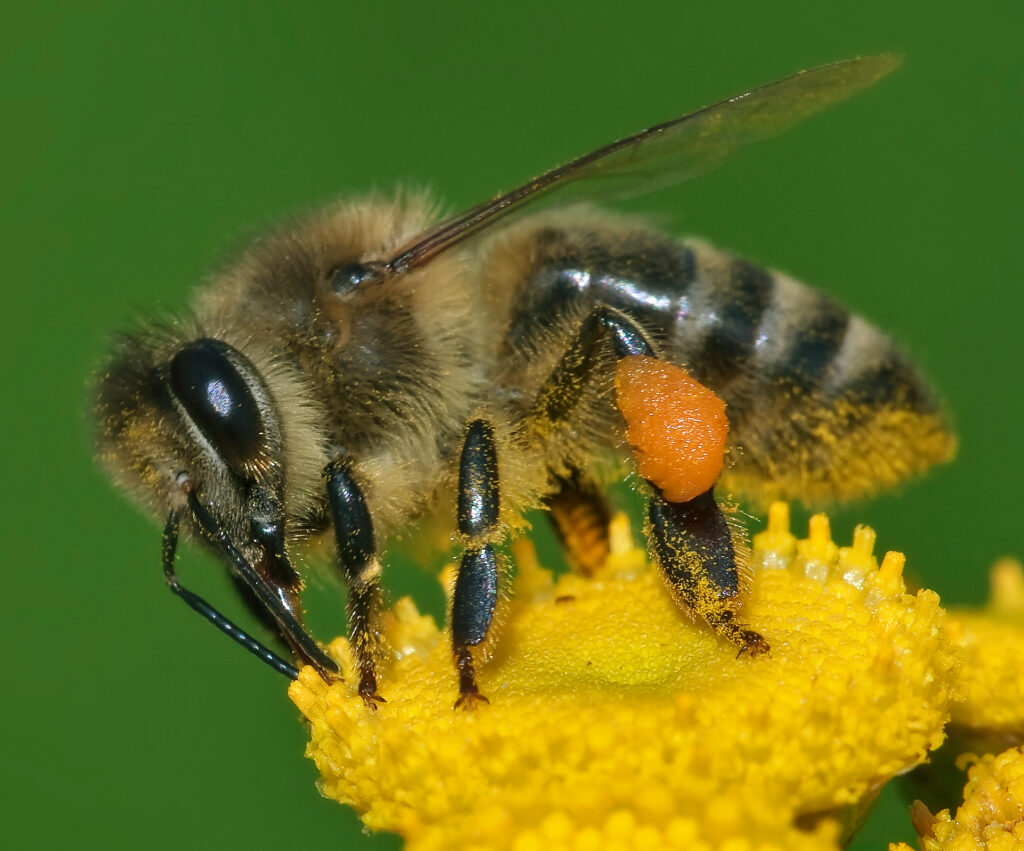
Honey bees aren’t just another insect—they’re the backbone of agriculture and one of the most important pollinators in the world.
- The Role of Honey Bees in Agriculture: Honey bees are responsible for pollinating a significant portion of the crops that feed the world. From almonds to apples, these busy pollinators ensure that grocery stores are stocked with a variety of fruits, vegetables, and nuts. Without them, our diets would be much less diverse and nutritious.
- Global Distribution of Honey Bee: These bees have a global presence, thriving in various climates. From the warm tropics to cooler temperate regions, they are found almost everywhere humans grow food. Their adaptability is one reason they are so essential to agriculture.
.jpg)
Types of Honey Bees
Not all honey bees are the same. There are several types, each with unique characteristics and behaviors.
Western Honey Bee (Apis mellifera)
- Characteristics: The Western Honey Bee is the most common species used in commercial beekeeping. Known for their productivity and relatively gentle nature, they are ideal for honey production.
- Behavior: These bees are highly social, living in large colonies. They communicate through intricate dances and pheromones, ensuring the hive functions smoothly.
- Habitat: They are adaptable and can be found in a variety of habitats, from forests to farmlands. Common in Europe, the Americas, and parts of Asia.
Eastern Honey Bee (Apis cerana)
- Characteristics: Smaller than their Western cousins, Eastern Honey Bees are native to South and Southeast Asia. They are less aggressive, but also less productive in honey production.
- Behavior: Known for its unique defense mechanisms, such as forming a “bee ball” to heat and kill intruders like wasps. They also have a more subdued version of the waggle dance.
- Habitat: Typically found in tropical and subtropical regions of Asia. They prefer wooded areas where they can nest in tree hollows.
Africanized Honey Bee (Apis mellifera scutellata)
- Characteristics: Often dubbed “killer bees,” these are a hybrid of the Western Honey Bee and the African Honey Bee. Smaller and more aggressive, they are also more resilient to certain diseases and pests.
- Behavior: Known for their defensive nature and tendency to swarm. They are more likely to abandon their hive if they sense danger, making them challenging for beekeepers.
- Habitat: Originally from Africa, they have spread throughout the Americas, particularly in tropical and subtropical regions. They prefer open areas where they can quickly escape predators.
The Life Cycle of Honey Bees
Understanding the life cycle of honey bees reveals just how complex and organized these insects are.
- Stages from Egg to Adult: The life of a honey bee begins as an egg laid by the queen. After three days, the egg hatches into a larva, which is then fed royal jelly by worker bees. Over the next few days, the larva spins a cocoon and pupates. Finally, it emerges as an adult bee, ready to take on its role in the hive.
- The Roles Within the Hive:
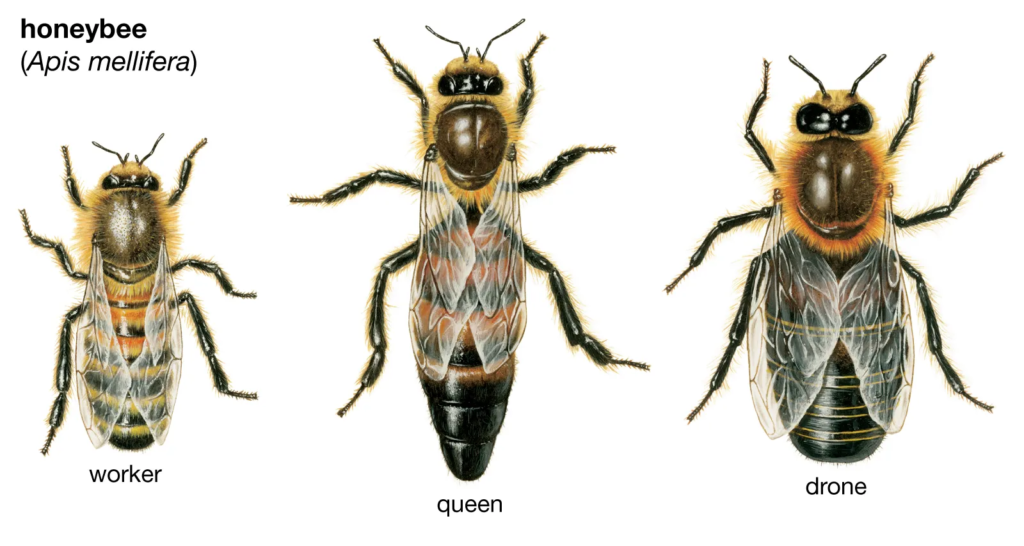
- Queen: The queen’s primary job is to lay eggs. She can lay up to 2,000 eggs a day during the peak season. The queen is also responsible for maintaining order within the hive through the release of pheromones.
- Workers: These are the female bees that do everything else—cleaning, feeding the larvae, defending the hive, and foraging for nectar and pollen. Worker bees are the backbone of the hive’s day-to-day operations.
- Drones: Drones are male bees whose sole purpose is to mate with a queen from another hive. They do not have stingers and do not contribute to the hive’s upkeep.
Unique Traits of Honey Bees
Honey bees are fascinating creatures, with unique behaviors that set them apart from other insects.
- Communication Through the “Waggle Dance”: One of the most intriguing aspects is the “waggle dance,” where foraging bees communicate the location of food sources to their hive mates. The dance’s direction and duration convey precise information about the distance and direction of the flowers they’ve found.
- Honey Production and Its Significance: Honey bees are renowned for producing honey, a natural sweetener humans have harvested for thousands of years. But honey isn’t just for us—bees rely on it as a food source, especially during winter when flowers are scarce.
- Social Structure and Colony Behavior: Honey bee colonies operate with military-like precision. Each bee has a specific role, and the hive functions as a cohesive unit. This social structure is crucial for the colony’s survival, especially in challenging environments.
This section provides a detailed yet accessible overview of honey bees, emphasizing their importance, diversity, and unique traits. The content is formatted clearly with a focus on readability and SEO, using a conversational tone to engage readers.
Bumblebees (Bombus)
Introduction to Bumblebees
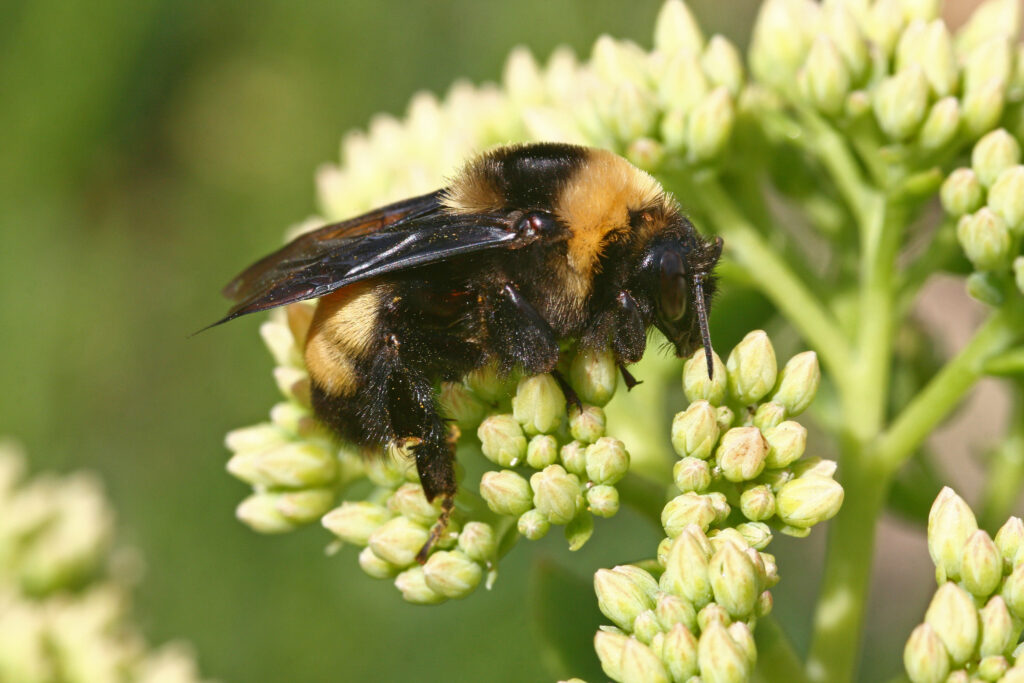
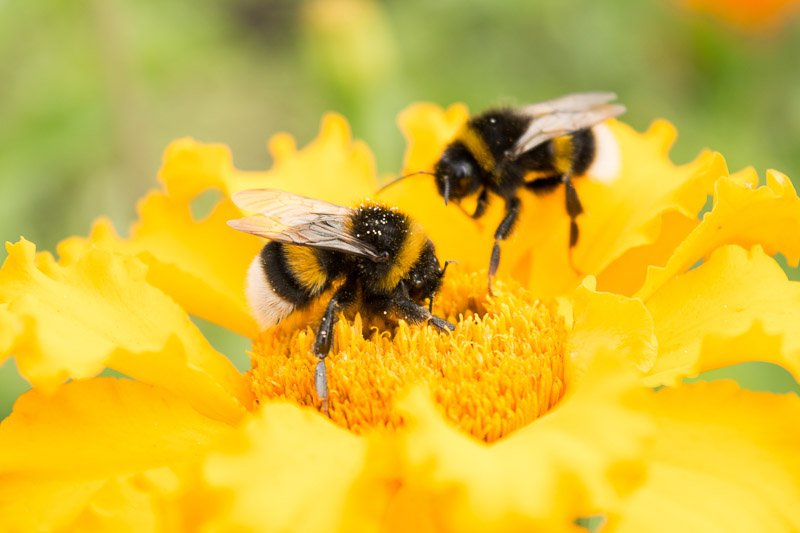
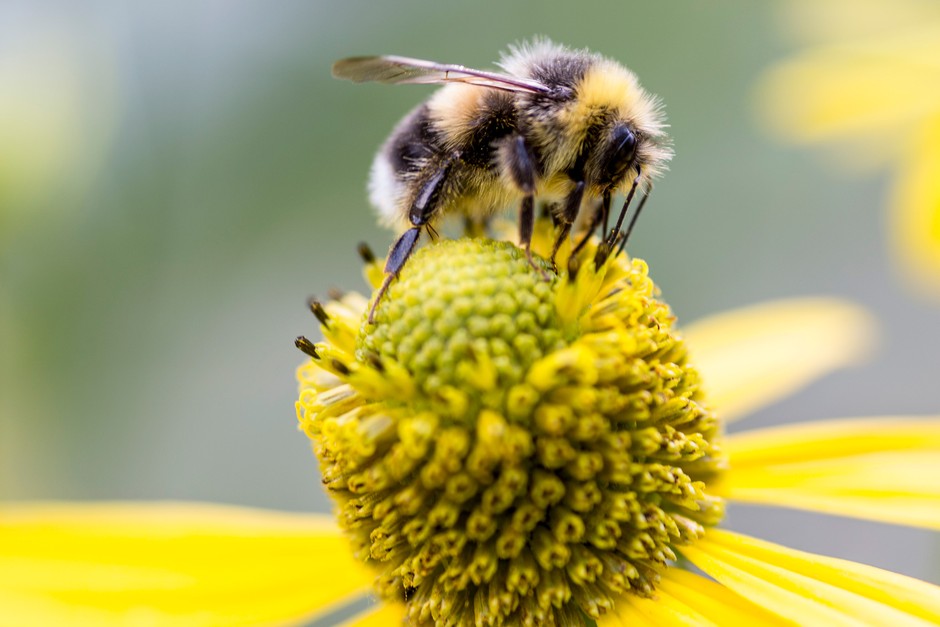
Bumblebees are the friendly giants of the bee world, known for their round, fuzzy appearance and low, buzzing flight. They play a vital role in pollination, especially in cooler climates where other bees might struggle.
- General Characteristics and Behavior: Bumblebees are larger than most other bees, with stout, hairy bodies that help them collect pollen. Unlike honey bees, they don’t form massive colonies or produce honey in large quantities. Instead, they focus on pollinating plants, often visiting flowers that require a bit more muscle, thanks to their unique ability to vibrate their bodies—a behavior known as buzz pollination.
- Distribution and Preferred Habitats: Bumblebees can be found across the globe, but they are especially common in temperate regions of the Northern Hemisphere. They thrive in a variety of habitats, from gardens and farmlands to meadows and forests. These bees prefer cooler environments and are often seen working diligently in the early morning or late evening when temperatures are lower.
Types of Bumblebees
There are many species of bumblebees, each with its own characteristics and preferred habitats. Here are a few of the most common ones you might encounter.
Common Eastern Bumblebee (Bombus impatiens)
- Characteristics: The Common Eastern Bumblebee is, as the name suggests, one of the most common species in North America. It has a black body with a yellow thorax and is relatively small compared to other bumblebees.
- Behavior: These bees are non-aggressive and are often found in gardens, where they pollinate a variety of plants. They are excellent pollinators for crops like tomatoes, which benefit from their buzz pollination technique.
- Habitat: The Common Eastern Bumblebee prefers open fields and gardens but can also be found in suburban areas. They build their nests close to the ground, often in old rodent burrows or under piles of grass.
Red-tailed Bumblebee (Bombus lapidarius)
- Characteristics: Recognizable by its striking black body and bright red tail, the Red-tailed Bumblebee is a common sight across Europe. It’s a larger species, with queens reaching up to 20mm in length.
- Behavior: This bee is a robust forager, often seen on a variety of wildflowers and crops. The Red-tailed Bumblebee is less likely to be found in gardens and prefers wilder, more natural environments.
- Habitat: These bees prefer grassy areas, heathlands, and coastal regions. They often nest in abandoned rodent holes or dense vegetation.
Garden Bumblebee (Bombus hortorum)
- Characteristics: The Garden Bumblebee is easily identified by its long tongue, which allows it to reach nectar in deep flowers like foxgloves. It has a yellow and black striped body with a white tail.
- Behavior: These bees are particularly attracted to gardens, where they play a crucial role in pollinating long-tubed flowers. They are also known for their high-pitched buzz, which can be heard from a distance.
- Habitat: As the name implies, the Garden Bumblebee is often found in gardens, parks, and woodlands. They prefer to nest in secluded spots, such as under hedgerows or in compost heaps.
The Life Cycle of Bumblebees
Bumblebees have a fascinating life cycle that revolves around the changing seasons.
- Overview of the Stages from Egg to Adult: The life of a bumblebee begins in the spring when the queen emerges from hibernation. She starts a new colony by laying eggs, which hatch into larvae. These larvae are fed by the queen until they pupate and eventually emerge as adult worker bees. The colony grows throughout the summer, with the queen continuing to lay eggs that develop into more workers, males, and new queens.
- The Role of the Queen and Worker Bees: The queen’s role is central to the colony’s success. She is responsible for laying all the eggs and ensuring the survival of the colony. Worker bees take over the tasks of foraging, feeding the larvae, and defending the nest. Unlike honey bee workers, bumblebee workers are capable of laying eggs if the queen’s influence wanes.
Unique Traits of Bumblebees
Bumblebees have several unique traits that set them apart from other bees, particularly in how they interact with their environment and adapt to different conditions.
- Buzz Pollination and Its Importance: One of the most distinctive behaviors of bumblebees is buzz pollination. By vibrating their flight muscles without moving their wings, they create a buzz that dislodges pollen from flowers. This technique is especially important for plants like tomatoes and blueberries, which release more pollen in response to this vibration.
- Nesting Behavior and Colony Structure: Unlike honey bees, bumblebees prefer to nest in small, hidden spaces. Their colonies are much smaller, usually numbering only a few hundred bees. The nest is typically an underground chamber or a cavity in a structure, lined with insulating materials like moss or grass. The colony’s life cycle is seasonal, with the queen being the only member to survive the winter.
- Adaptive Traits for Survival in Colder Climates: Bumblebees are well-adapted to cooler climates, thanks to their ability to generate heat by shivering their flight muscles. This trait allows them to forage in lower temperatures when other bees are inactive. Additionally, their thick, furry bodies provide insulation, helping them to retain heat in cold environments.
This section dives into the world of bumblebees, showcasing their unique behaviors, life cycle, and the important roles they play in our ecosystems. The content is designed to be engaging, informative, and optimized for readability and SEO, ensuring that readers not only learn but enjoy the process.
Carpenter Bees (Xylocopa)
Introduction to Carpenter Bees
Carpenter bees are intriguing insects, often confused with bumblebees due to their similar size and appearance. However, their unique nesting habits set them apart, particularly their tendency to burrow into wood.
- Overview of Carpenter Bees and Their Unique Nesting Habits: Unlike other pollinators that build nests out of wax or paper, carpenter bees prefer to tunnel into wood. They use these tunnels as secure places to lay eggs and care for their young. This behavior results in the small, perfectly round holes you might find in wooden structures around your home. These holes are evidence of their nesting activity.
- Geographic Distribution and Common Habitats: Found worldwide, carpenter bees thrive in temperate and tropical regions. In the United States, they are especially common in the eastern and southern states. They favor softwoods such as pine, cedar, and redwood, making decks, fences, and outdoor furniture attractive nesting sites.
Types of Carpenter Bees
Several species are prevalent in the U.S., each with unique traits and preferred habitats.
Eastern Carpenter Bee (Xylocopa virginica)
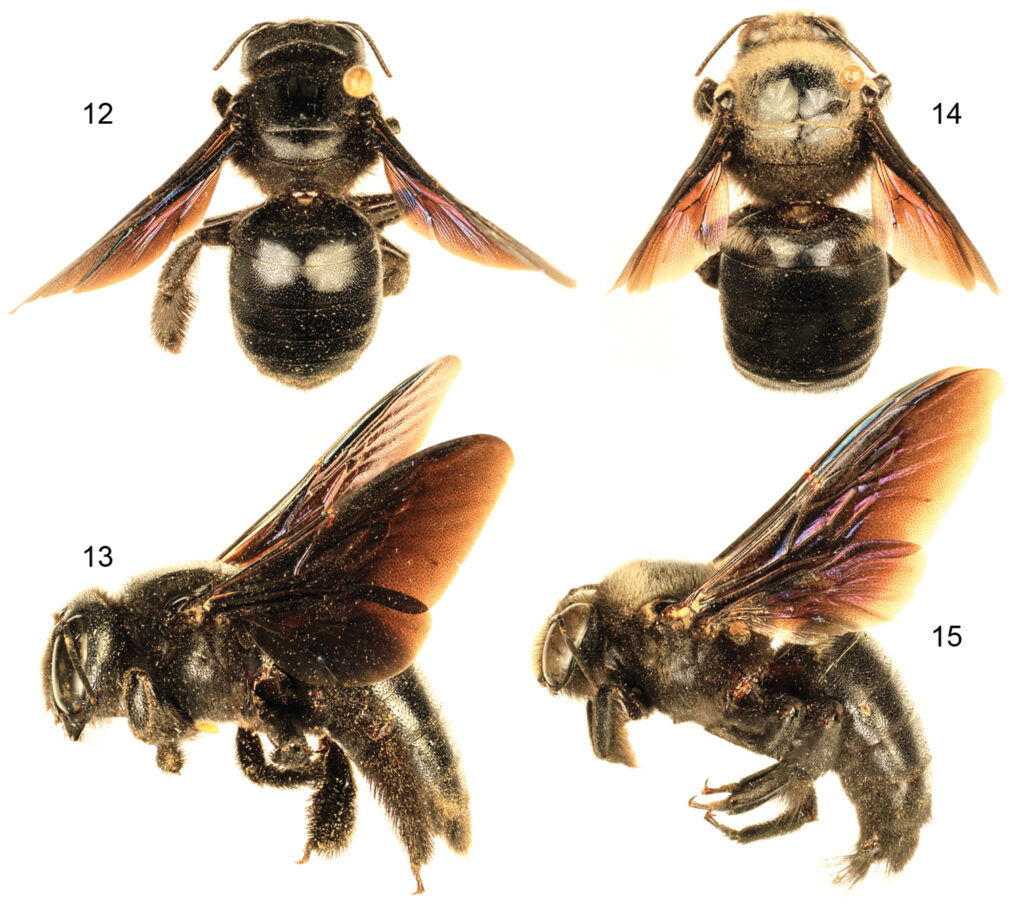
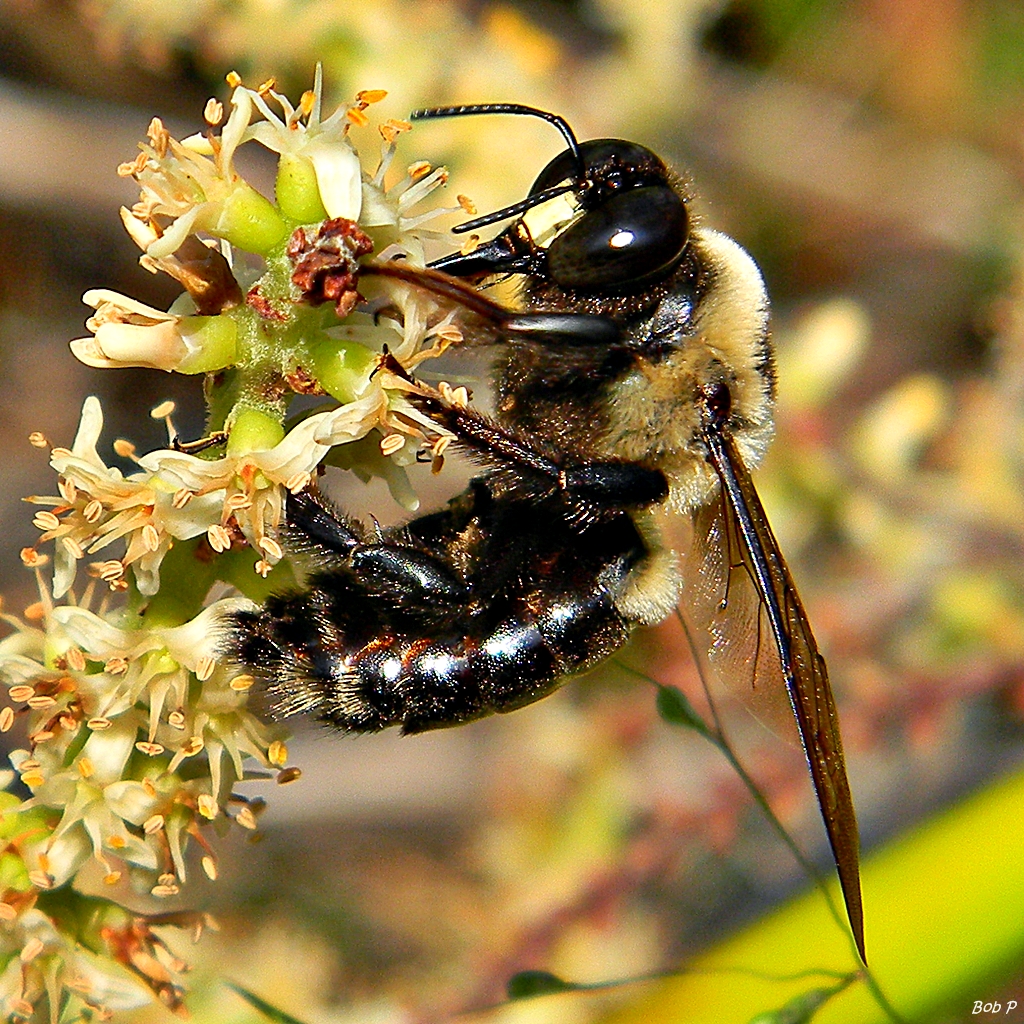
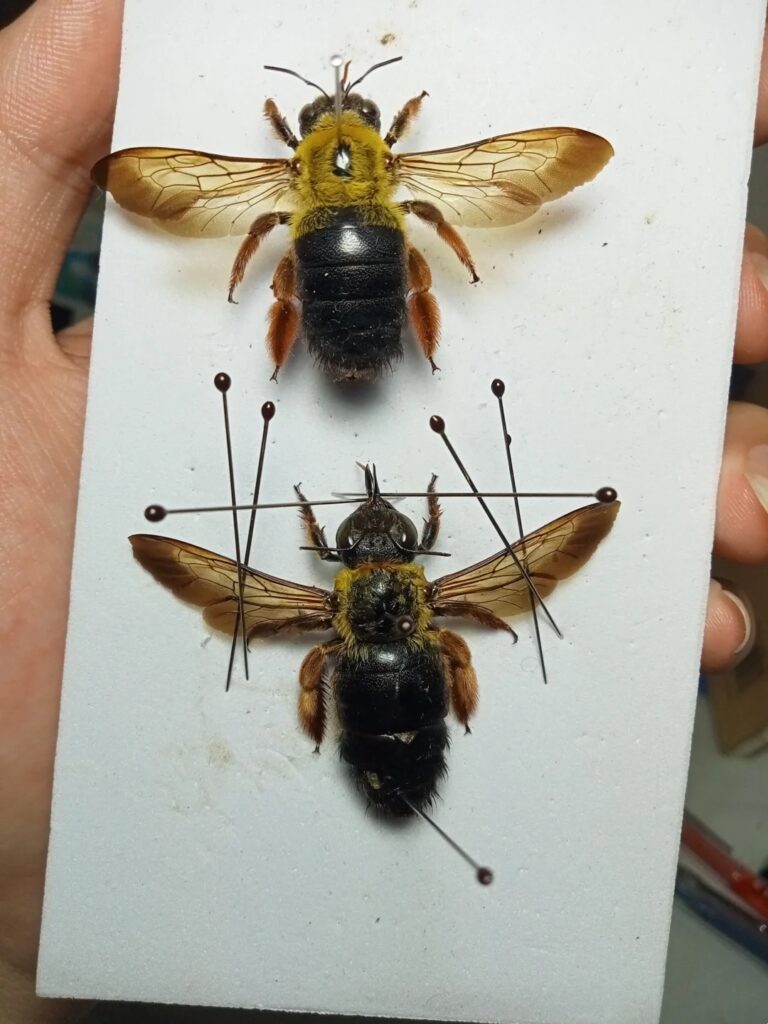
- Characteristics: One of the largest species in North America, the Eastern Carpenter Bee features a shiny black abdomen and a fuzzy yellow thorax. Males are easily recognizable by their white or yellow faces, distinguishing them from other species.
- Behavior: These bees are solitary, meaning each female builds and maintains her own nest. While males might hover around nesting sites, they are generally harmless and cannot sting. They are often seen patrolling areas where they might find potential mates or nesting sites.
- Habitat: Preferring the eastern U.S., these bees are commonly found in wooded areas or around human structures like porches and fences.
California Carpenter Bee (Xylocopa californica)
- Characteristics: This species stands out with its metallic blue-green sheen on the female’s abdomen. Males are golden-brown and have a slender body compared to the females.
- Behavior: Less likely to be found around human habitation, California Carpenter Bees favor natural habitats such as forests and gardens. However, they will occasionally nest in wooden structures.
- Habitat: Native to California and the southwestern U.S., they thrive in chaparral, coastal sage scrub, and other dry, shrubby areas.
Southern Carpenter Bee (Xylocopa micans)
- Characteristics: Smaller and less aggressive than the Eastern Carpenter Bee, the Southern Carpenter Bee has a dark, shiny body with sparse hair and a metallic sheen.
- Behavior: This species is less likely to cause structural damage. They prefer softer, decaying wood, which helps minimize their impact on human structures.
- Habitat: Found primarily in the southeastern U.S., they inhabit wooded areas, gardens, and locations with plenty of decaying wood.
The Life Cycle of Carpenter Bees
The life cycle of carpenter bees is an interesting process that highlights their nesting and reproductive behaviors.
- Overview of Reproductive Stages: The lifecycle begins when a female bores into wood to create a series of chambers. She lays an egg in each chamber and provisions it with a ball of pollen and nectar. After sealing the chamber, the larvae develop into adult bees, emerging in the spring.
- Nest Construction and Brood Care: The nests consist of tunnels that can extend up to 10 inches, with several chambers branching off. Each chamber houses a single egg, which is carefully provisioned before being sealed. Unlike social insects, carpenter bees do not provide ongoing care for their young after laying the eggs. Instead, they rely on the stored provisions for the larvae’s development.
Unique Traits of Carpenter Bees
Carpenter bees have distinctive features and behaviors that make them unique.
- Wood-Boring Behavior and Its Ecological Impact: Although often seen as pests due to their wood-boring habits, these bees play a crucial ecological role. By creating tunnels in dead wood, they help decompose old trees and recycle nutrients back into the soil. This behavior also provides habitats for other insects and animals.
- Interaction with Humans and Managing Carpenter Bee Damage: While they can cause damage to wooden structures, carpenter bees are generally non-aggressive. To prevent damage, it’s beneficial to seal any exposed wood with paint or varnish, as untreated wood is more appealing to these insects. If you find them in your home, consider offering an alternative nesting site, like a bee house, to redirect their nesting efforts.
- Differences Between Carpenter Bees and Bumblebees: Carpenter bees and bumblebees, despite their similar appearance, have notable differences. Carpenter bees have smooth, shiny abdomens, while bumblebees are covered in dense hair. Bumblebees are social and live in colonies, whereas carpenter bees are solitary. Bumblebees typically nest in the ground or old burrows, unlike the wood-boring carpenter species.
This section provides an insightful look into carpenter bees, focusing on their unique behaviors and ecological roles. The content is crafted to be engaging and informative, ensuring readers can easily understand and appreciate these fascinating insects.ures that readers not only learn about these bees but also appreciate their role in the environment.
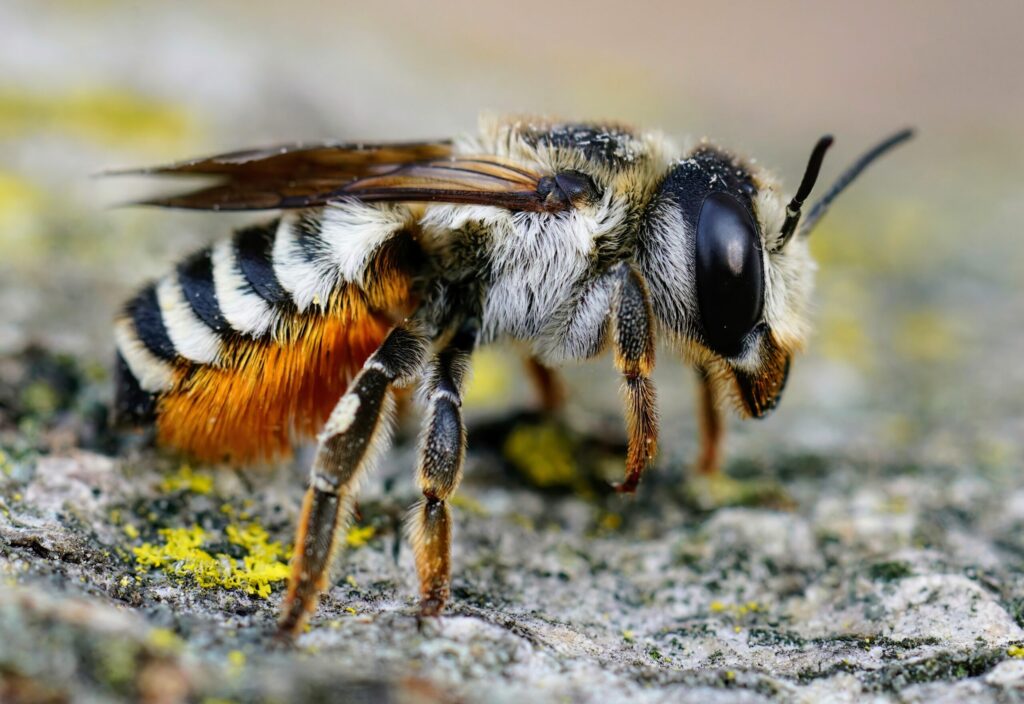
Solitary Bees
Introduction to Solitary Bees
Solitary bees are a unique and fascinating group of insects that live much different lives than the more well-known honeybees and bumblebees. As the name suggests, these insects lead solitary lives, meaning each female builds her own nest and raises her young independently. Despite their solitary nature, they play a crucial role in pollination, making them essential to ecosystems and agriculture alike.
- Overview of Solitary Bees and Their Solitary Nesting Behavior: Unlike their social relatives, these insects don’t live in hives or colonies. Each female constructs her own nest, often in soil, wood, or hollow plant stems. She is responsible for gathering food, laying eggs, and providing for her offspring, without the help of worker bees. This independence is what makes them “solitary.” Even though they don’t work together like social insects, they’re incredibly efficient pollinators, often visiting more flowers than their social counterparts.
- Importance of Solitary Bees in Pollination: These creatures are superstars when it comes to pollination. They’re known for their efficiency, often pollinating a wide variety of plants, including many that are crucial for food production. Some solitary species, like mason bees, are even better pollinators of certain crops than honeybees. Their role in pollination is vital, especially as the decline in honeybee populations continues to be a concern.
Types of Solitary Bees
Solitary pollinators come in many varieties, each with unique characteristics and behaviors. Let’s explore a few of the most common types.
Mason Bees (Osmia)
- Characteristics: Mason bees are small, usually metallic green or blue, and have a stout body. They get their name from their nesting behavior, as they use mud to seal off the cells in which they lay their eggs, much like a bricklayer or “mason.”
- Behavior: These insects are incredibly gentle and rarely sting, making them a favorite among gardeners. They’re solitary but often nest in close proximity to others of their kind. Each female constructs her own nest in existing holes or cavities, such as hollow stems or cracks in wood.
- Habitat: Mason bees are found across the globe, thriving in various environments from forests to urban gardens. They’re particularly drawn to temperate climates where there are plenty of flowers for foraging.
Leafcutter Bees (Megachile)
- Characteristics: Leafcutter bees are known for their habit of cutting neat, circular pieces out of leaves, which they use to construct their nests. They have a robust body, and the females often have a specialized structure called a “pollen brush” on the underside of their abdomen for carrying pollen.
- Behavior: These insects are meticulous builders, using leaf pieces to line the walls of their nest cavities. Despite their leaf-cutting behavior, they cause minimal damage to plants and are highly beneficial as pollinators.
- Habitat: Leafcutter species are found in various environments, from forests to agricultural fields. They prefer areas with plenty of flowering plants and are often seen in gardens, where they gather materials for their nests.
Mining Bees (Andrena)
- Characteristics: Mining bees are typically smaller, with hairy bodies that range in color from black to reddish-brown. They’re named for their burrowing behavior, as they dig tunnels in the ground to create their nests.
- Behavior: These insects are often the first to emerge in spring, playing a crucial role in pollinating early-blooming plants. The female digs a tunnel in the ground, which branches off into individual cells where she lays her eggs.
- Habitat: Mining bees are commonly found in temperate regions and prefer sandy or loose soil for nesting. They’re often seen in meadows, gardens, and even lawns, where they dig their characteristic burrows.

The Life Cycle of Solitary Bees
These pollinators have a fascinating life cycle that differs significantly from that of social bees. Their solitary nature means each female is entirely responsible for her offspring.
- Overview of the Solitary Bee Life Cycle: The life cycle of these insects begins when the female lays her eggs in a nest she has constructed herself. She provides each egg with a supply of pollen and nectar, sealing the cell before moving on to the next. The eggs hatch into larvae, which feed on the stored pollen. After pupating, the young emerge as adults, ready to start the cycle anew.
- Nesting Habits and Brood Development: These creatures are incredibly resourceful when it comes to nesting. They use a variety of materials, from mud and leaves to wood and soil, depending on the species. The female’s primary focus is ensuring her offspring have enough food to develop, which she achieves by meticulously gathering and storing pollen in each cell.
Unique Traits of Solitary Bees
Solitary species possess unique traits that make them both interesting and invaluable to the environment.
- Nesting in Unique Environments: These insects are masters of adaptation, often nesting in environments that social species would never consider. They might choose hollow plant stems, abandoned beetle burrows, or even crevices in rocks. This diversity in nesting sites helps them thrive in a variety of habitats, from forests to urban areas.
- Their Role in Pollinating Specific Plants: Some solitary species have evolved alongside specific plants, becoming specialized pollinators. For example, certain types of mason bees are particularly effective at pollinating fruit trees like apples and cherries. Their ability to pollinate efficiently and effectively makes them critical to both natural ecosystems and agriculture.
- Differences from Social Bees and Their Impact on Ecosystems: Solitary species differ from social bees in many ways, from their nesting behavior to their social structure. These differences mean they often fill ecological niches that social species cannot, making them crucial for maintaining biodiversity. Additionally, because they do not depend on a colony, solitary bees are often more resilient to environmental changes, further highlighting their importance in our ecosystems.
This section on solitary bees offers an in-depth look at these often-overlooked pollinators, emphasizing their unique characteristics and contributions to the environment. By presenting the information in a clear, engaging format, it ensures that readers gain a greater appreciation for these vital insects.
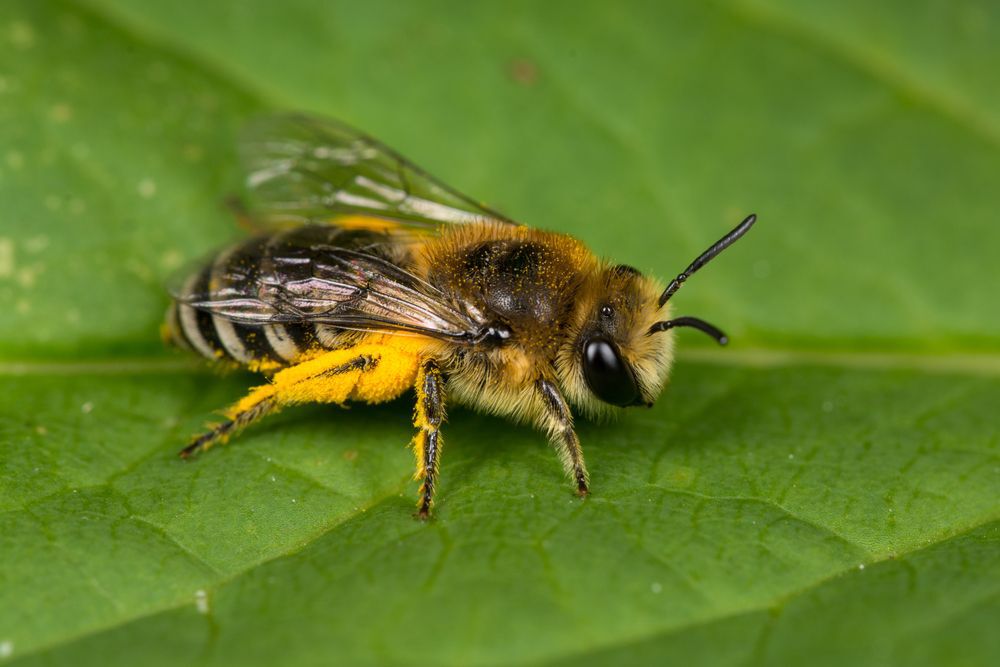
Other Notable Bees
Stingless Bees (Meliponini)
Overview and Characteristics
Stingless bees are a fascinating group of bees that, as the name suggests, do not have a sting. Found primarily in tropical and subtropical regions, these bees are small, social insects that live in colonies. They are essential for the environment and agriculture, much like their stinging relatives.
- Physical Traits: These bees are typically smaller than honeybees, with a wide range of colors and patterns. Their bodies are often more robust and hairy, helping them to collect pollen effectively.
- Behavior: Unlike honeybees, stingless bees do not defend their nests aggressively. Instead, they rely on their numbers and complex nesting behaviors to protect their colonies.
Unique Nesting and Honey Production Methods
Stingless bees are renowned for their unique nesting and honey production methods:
- Nesting: They build their nests in hollow spaces such as tree trunks, underground cavities, or man-made structures. Their nests are often complex, consisting of multiple chambers made from a mixture of wax, resin, and plant materials.
- Honey Production: The honey produced by stingless bees is often more acidic and has a distinct taste compared to honey from stinging bees. This honey is prized in some cultures for its medicinal properties and unique flavor.
Sweat Bees (Halictidae)
Overview and Unique Behavior
Sweat bees are a diverse family of bees known for their attraction to human sweat. This behavior might seem unusual, but it’s actually a key aspect of their life cycle.
- Physical Traits: These bees vary greatly in size and color, from metallic green and blue to dull brown. Many sweat bees are small to medium-sized, and they can be recognized by their iridescent sheen.
- Behavior: Sweat bees are particularly drawn to the salts and proteins found in human sweat. This attraction helps them gather the nutrients they need for their diet. They are also known for their ground-nesting habits, creating nests in sandy or loose soil.
Distribution and Diversity Within the Family
Sweat bees are found worldwide, with the greatest diversity in tropical and subtropical regions. Within the Halictidae family, there are over 500 species, each with unique characteristics:
- Diversity: The family includes both solitary and social species, showcasing a wide range of nesting and foraging behaviors. Some are solitary nesters, while others live in small colonies.
- Distribution: From North America to Africa and South America, sweat bees are adaptable and can be found in various habitats, including gardens, meadows, and forests.
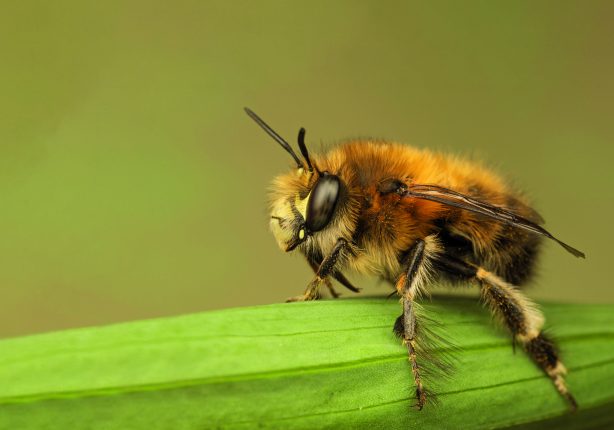
Digger Bees (Anthophorini)
Overview and Burrowing Behavior
Digger bees are well-known for their burrowing behavior, which sets them apart from many other bee species. They are solitary bees that create nests in the ground, which are crucial for their reproduction.
- Physical Traits: These bees are typically medium-sized with a stout body and hairy legs, which help in pollen collection. Their burrowing behavior is facilitated by their strong mandibles and legs.
- Behavior: Female digger bees dig nests in the soil, creating a network of tunnels and chambers. Each chamber is stocked with pollen and nectar before an egg is laid. The larva feeds on this stored food as it develops.
Unique Pollination Strategies
Digger bees play a crucial role in pollination, especially in wild and agricultural environments. Their unique behaviors include:
- Pollination: As they forage for nectar and pollen, they often visit many flowers, which helps in the cross-pollination of plants. This is particularly important for certain wildflowers and crops.
- Foraging: Their burrowing nests are usually located near flowering plants, ensuring that they are well-positioned to pollinate effectively. Their methodical approach to foraging and nest construction makes them valuable pollinators in various ecosystems.
These notable bees highlight the diversity within the bee world, each with unique behaviors and adaptations that contribute to their ecological roles. From the stingless bees’ intricate nests and unique honey to sweat bees’ attraction to human sweat and digger bees’ burrowing habits, these species add a rich tapestry of life to our planet. Understanding their characteristics helps us appreciate their importance and the vital roles they play in pollination and ecosystem health.
Conservation of Bees
Threats to Bee Populations
Habitat Loss, Pesticide Use, and Climate Change
Bee populations face significant challenges due to various environmental factors:
- Habitat Loss: Urban development, agricultural expansion, and deforestation are destroying natural habitats where bees thrive. Without sufficient wild spaces and native plants, bees struggle to find food and shelter.
- Pesticide Use: Chemicals used in agriculture, such as neonicotinoids, harm bees directly or disrupt their foraging behavior. These pesticides can weaken bee immune systems, making them more susceptible to diseases and parasites.
- Climate Change: Shifts in climate patterns affect the availability of flowers and nesting sites. Extreme weather conditions can disrupt the timing of flower blooms, making it difficult for bees to find food.
Disease and Parasites Impacting Bee Health
Bee health is compromised by various diseases and parasites:
- Disease: Pathogens like Nosema and American Foulbrood can devastate colonies. These diseases weaken bees, reduce their ability to forage, and, in severe cases, lead to colony collapse.
- Parasites: Varroa mites are a major threat, infesting honeybee colonies and feeding on their blood. This parasitic relationship weakens bees and spreads viruses that can be fatal.

Conservation Efforts
Global and Local Initiatives to Protect Bees
Efforts to protect bees are being made on both global and local scales:
- Global Initiatives: Organizations like the World Bee Project and the Pollinator Partnership work to implement conservation strategies, protect habitats, and raise awareness about bee decline.
- Local Initiatives: Many communities have launched programs to create bee-friendly environments. These include planting wildflowers, reducing pesticide use, and establishing urban beekeeping programs.
How Individuals Can Help
Everyone can contribute to bee conservation with simple actions:
- Plant Pollinator-Friendly Gardens: Choose plants that provide nectar and pollen throughout the growing season. Flowers like lavender, sunflowers, and marigolds attract bees and support their diet.
- Avoid Pesticides: Opt for natural pest control methods and reduce the use of harmful chemicals in your garden. This helps create a safer environment for bees to thrive.
- Support Local Beekeepers: Buy honey from local beekeepers and participate in beekeeping workshops. Supporting local apiculture helps sustain bee populations and promotes awareness.
The Future of Bees
Research and Innovation in Bee Conservation
The future of bee conservation relies on ongoing research and technological advancements:
- Research: Scientists are studying bee behavior, genetics, and ecology to develop better conservation strategies. Research into disease management and habitat restoration is crucial for bee health.
- Innovation: New technologies, such as bee-friendly pesticides and artificial intelligence for monitoring bee populations, offer promising solutions for addressing the challenges bees face.
The Role of Education and Awareness
Education and awareness play a crucial role in protecting bee populations:
- Education: Teaching people about the importance of bees and how they contribute to our ecosystems encourages responsible behavior and support for conservation efforts.
- Awareness: Campaigns and community outreach programs help raise awareness about the threats facing bees and inspire collective action to address these issues.
By understanding the threats to bees and supporting conservation efforts, we can all play a part in ensuring the survival of these vital pollinators. Every action, from planting a garden to supporting research, contributes to a healthier environment for bees and, ultimately, for ourselves.

Conclusion
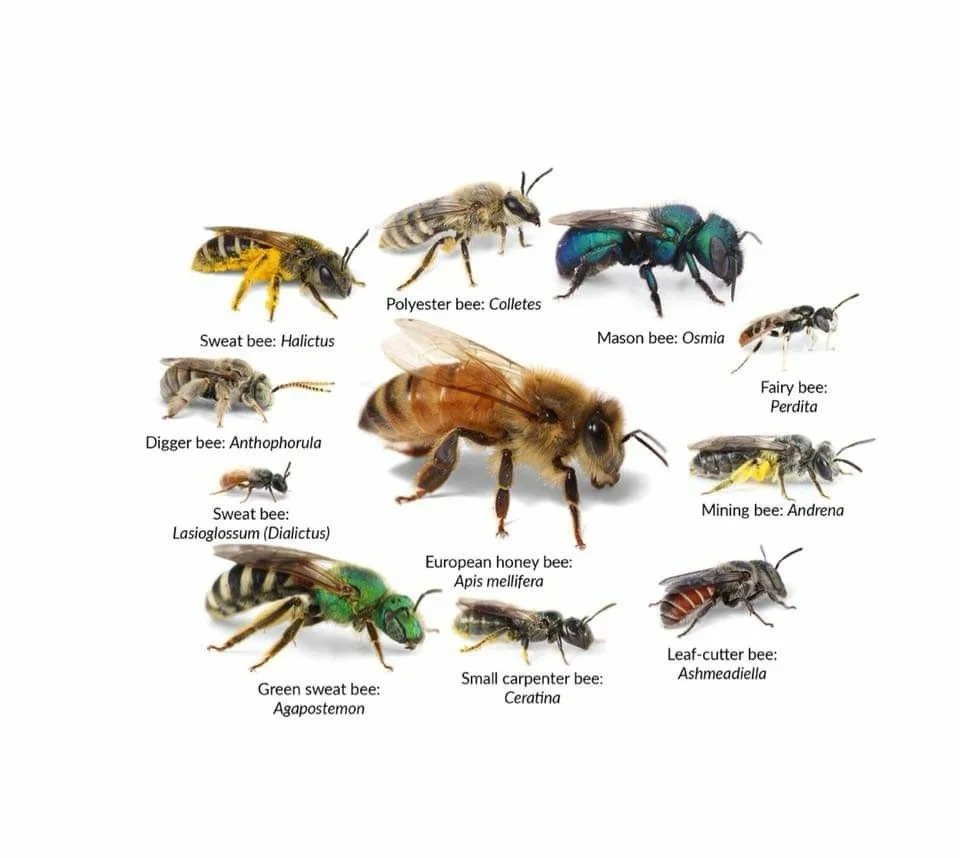
We’ve delved into the fascinating world of various bee types, each bringing something unique to our ecosystems. From honey producers that are vital to agriculture and honey-making, to bumblebees with their effective pollination techniques, and solitary species that quietly contribute to their environments, every bee plays a significant role. Carpenter bees, with their remarkable nesting habits, along with lesser-known varieties like stingless and sweat bees, each add to this rich tapestry of diversity.
These incredible insects are more than just fascinating creatures; they are essential for maintaining our environment. Their pollination efforts help plants reproduce and support our food systems, contributing to a diverse array of fruits, vegetables, and flowers. Without their contributions, our natural landscapes and food supply would be in serious trouble.
It’s crucial that we take steps to protect and support these vital pollinators. Simple actions like planting bee-friendly flowers, cutting back on pesticide use, and supporting local beekeepers can have a big impact. By taking care of them, we’re also taking care of our planet and ourselves. Let’s all commit to doing our part to ensure these amazing insects continue to thrive and support our ecosystems for years to come.